Sep 14, 2026
Digital twins, live virtual copies of physical equipment and production lines, are changing how Louisiana factories monitor output, cut downtime, and train workers. LSU Continuing Education through LSU Online, in partnership with the LSU College of Engineering and Digi Twin Global, developed the Digital Twin Design and Production Certificate to equip professionals with the skills to lead this shift.
Key Insights
- LSU Continuing Education through LSU Online delivers the Digital Twin Design and Production Certificate, a seven-course program built with LSU's College of Engineering and Digi Twin Global.
- A digital twin is a live, connected virtual model of a machine, process, or facility that updates as real-world conditions change, not a static 3D drawing.
- The global digital twin market is projected to grow about 40% a year and reach $350 billion by 2034, according to SAS and the Manufacturing Leadership Council.
- Manufacturing, energy, and construction, the three industries digital twins affect most, are also foundational to the Louisiana economy.
- The certificate requires no coding background and is built for engineers, operations staff, IT professionals, and business leaders alike.
Louisiana manufacturers run some of the most complex industrial operations in the country, from petrochemical plants along the Mississippi River corridor to shipbuilding and advanced manufacturing sites across the state.
The Digital Twin Design and Production Certificate, delivered by LSU Continuing Education through LSU Online, in partnership with the LSU College of Engineering and Digi Twin Global, was built to help the people running those operations put digital twin technology to work.
As more plants adopt sensors, cloud platforms, and real-time monitoring, digital twins have moved from a buzzword at industry conferences to a practical tool on the factory floor.
What Is a Digital Twin, and Why Does It Matter to Manufacturers?
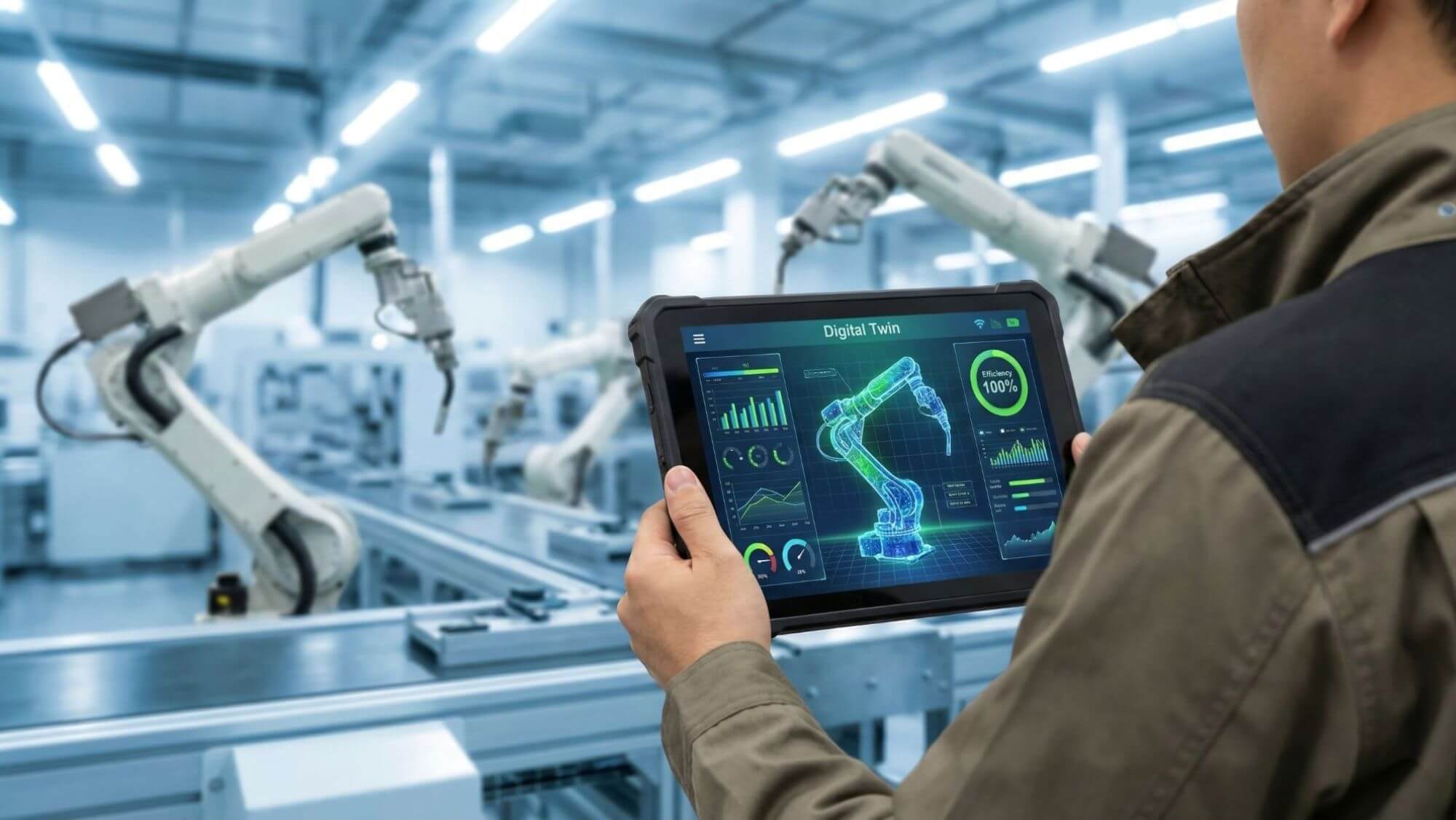
A digital twin is a live, connected virtual replica of a physical machine, production line, or entire factory. Unlike a static CAD drawing or a one-time simulation, a digital twin pulls in real-world data continuously, so the virtual model reflects what's actually happening on the floor at any given moment.
That constant data flow is what makes digital twins useful. According to a peer-reviewed review published in the International Journal of Advanced Manufacturing Technology, digital twin technology can enhance efficiency and reduce costs across the manufacturing process by letting engineers test changes virtually before touching real equipment. For a Louisiana plant running expensive, high-throughput lines, that means fewer costly trial-and-error adjustments and faster identification of problems before they become failures.
How Louisiana Manufacturers Are Putting Digital Twins to Work
Manufacturing plants across Louisiana, from chemical processing facilities to metal fabrication shops, are starting to apply digital twins in a few consistent ways.
- Predictive maintenance. Sensors on equipment feed data into the digital twin, which flags wear patterns and potential failures before a machine actually breaks down, cutting unplanned downtime.
- Layout and process planning. Engineers test new production line layouts or workflow changes in the virtual model first, catching bottlenecks without shutting down live operations.
- Operator training. New employees can practice on a digital twin instead of live equipment, reducing risk while they build hands-on experience.
- Performance monitoring. Plant managers get a real-time, plant-wide view of output, energy use, and equipment health instead of piecing that picture together from separate reports.
McKinsey & Company reports that digital twins are already reshaping factory decision-making by giving manufacturers faster, more accurate ways to optimize operations. For a state where manufacturing, energy, and petrochemical production anchor entire regional economies, that kind of visibility has real weight. A plant that can catch a maintenance issue two weeks before it causes a shutdown protects jobs, output, and revenue that ripple through the surrounding community.
Why the Digital Twin Skills Gap Is a Louisiana Problem
The technology is moving faster than the workforce trained to use it. Digital twin platforms combine Internet of Things sensors, cloud computing, artificial intelligence, and 3D visualization tools, and most engineering and operations professionals never studied any of that in school. That gap is exactly why LSU Engineering Dean Vicki Colvin pushed to build a program that could close it quickly.
“The engineers and business leaders of tomorrow need digital twin skills today,” Colvin said in announcing the program. “At LSU, we recognized this need and worked to fill the gap quickly with a high-quality program that combines expertise across disciplines.”
Louisiana's economy leans heavily on the industries where digital twins are gaining ground fastest: manufacturing, energy, construction, and agribusiness. Closing the skills gap here directly affects how competitive the state's plants and engineering firms stay as digital twin adoption spreads nationally.
Inside the Digital Twin Design and Production Certificate
The Digital Twin Design and Production Certificate, delivered by LSU Continuing Education through LSU Online, in partnership with the LSU College of Engineering and Digi Twin Global, spans seven online courses, covering roughly 140 hours of instruction over about eight months. Courses run in a cohort format, and each takes four weeks with a one-week break before the next begins. Learners work through:
The program was built in partnership with LSU's College of Engineering and the Baton Rouge-based consultancy Digi Twin Global, giving it both academic depth and real industry input. It's designed for engineers, IT and operations professionals, project managers, and business leaders who need to understand digital twin technology and its return on investment, and no coding background is required.
Learners who complete the certificate earn an official LSU credential and a digital badge they can add to LinkedIn profiles or professional portfolios. According to LSU alumnus and Digi Twin Global co-founder Joey Coco, the timing lines up directly with what the state needs.
“Digital twins are how we turn the scale of our commercial infrastructure into a strategic advantage,” Coco said. “This certificate prepares the workforce that will operate and modernize these systems that keep the country moving, with LSU and Louisiana leading the charge.”
What This Means for Your Career
For professionals across Southern Louisiana's manufacturing corridor, digital twin fluency is becoming a differentiator rather than a nice-to-have. Employers are looking for people who can bridge the gap between shop-floor operations and the software platforms now running alongside them. A credential like the Digital Twin Design and Production Certificate signals to employers that a candidate can speak both languages, the technical and the operational, and understands where digital twin investment actually pays off.
Frequently Asked Questions
What is a digital twin?
A digital twin is a virtual representation of a physical object, system, process, or environment that uses real-world data to mirror performance and behavior over time. It lets organizations monitor systems, test scenarios, and make more informed decisions using live, connected data rather than static reports.
Do I need a coding background to earn the Digital Twin Design and Production Certificate?
No. LSU Continuing Education through LSU Online, in partnership with the LSU College of Engineering and Digi Twin Global, designed the certificate for professionals in engineering, IT, operations, and project management who want a practical understanding of digital twins. No programming or coding experience is required to enroll.
How long does the certificate take to complete?
The full program includes seven courses and requires about 140 hours of learning, typically completed over approximately eight months. Each course runs four weeks in a cohort format, followed by a one-week break before the next course begins.
Who should consider earning a digital twin certification?
The certificate suits business leaders who need to understand the financial and strategic case for digital twin investment, along with engineers, IT staff, and operations professionals who will work directly with digital twin systems. It's a strong fit for anyone in Louisiana's manufacturing, energy, or construction sectors looking to build relevant, in-demand skills.
Start Building Your Digital Twin Skills
Ready to build the skills Louisiana manufacturers are hiring for? Explore the Digital Twin Design and Production Certificate and take the next step toward leading your organization's digital transformation. Visit the LSU Continuing Education through LSU Online website to browse the full course catalog and find the right program for your career goals.